
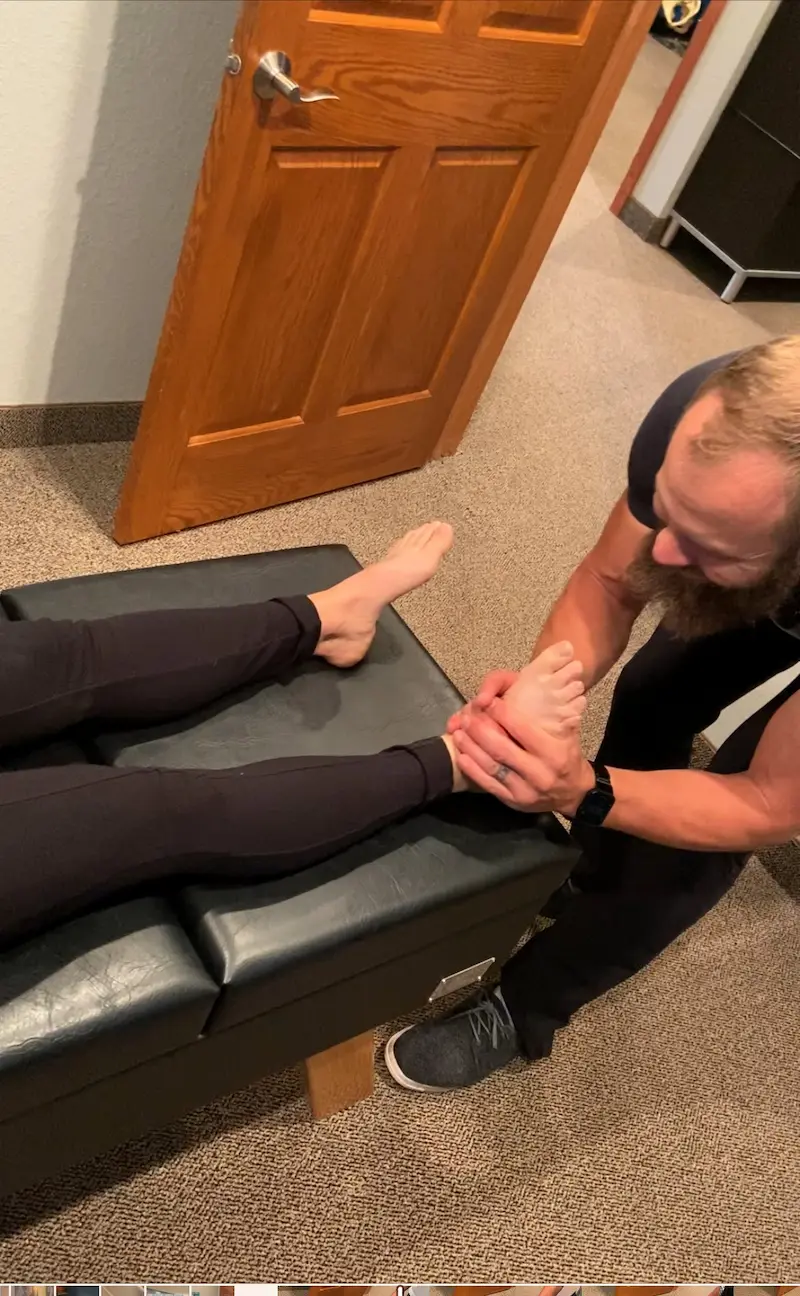
Most people think of chiropractic care as something that happens to your back and neck. But the same principles that apply to spinal alignment apply to every joint in your body. At RAK Chiropractic in Rochester MN, extremity adjustments – for shoulders, elbows, wrists, hips, knees, and ankles – are a regular part of the care provided, especially for active patients and athletes dealing with joint problems that will not resolve on their own.
What Is an Extremity Adjustment?
An extremity adjustment is a chiropractic adjustment applied to a joint outside the spine. The goal is the same as any chiropractic adjustment – restore proper joint motion, reduce restriction, and allow the nervous system and surrounding soft tissue to function the way they are supposed to.
Joints can lose their normal range of motion or develop subtle misalignments just like spinal vertebrae can. When that happens, the result is often pain, stiffness, weakness, or a nagging feeling that something is just not right – even when imaging looks clean. Extremity adjustments address that underlying joint dysfunction directly.
Common Joints Treated at RAK Chiropractic
Shoulder
The shoulder is one of the most complex joints in the body and one of the most commonly affected by restriction and misalignment. Overhead athletes – baseball players, volleyball players, swimmers – are especially prone to shoulder joint problems. So are people who sit at desks with forward-rounded posture for years at a time.
Shoulder pain does not always mean a rotator cuff tear or labral damage. Sometimes it is a joint that has lost its normal glide and needs to be restored. Chiropractic assessment can help determine whether that is the case – and whether adjusting the shoulder, the cervical spine, or a combination of both makes the most sense.
Learn more about extremity pain relief at RAK.
Elbow
Elbow pain shows up in tennis players, golfers, throwing athletes, and people who do repetitive work with their hands and arms. The terms “tennis elbow” and “golfer’s elbow” describe specific patterns of inflammation and dysfunction that, when they linger, often involve a combination of soft tissue problems and joint restriction.
Adjusting the elbow joint, along with addressing the wrist and cervical spine as needed, can be part of an effective approach when conservative care alone has not produced results. At RAK, this is assessed as part of the whole picture – not just the spot that hurts.
Wrist and Hand
The wrist is made up of multiple small joints, any of which can lose normal motion and contribute to pain, weakness, or that persistent ache that comes from repetitive keyboard or mouse use. Carpal tunnel syndrome is probably the best-known wrist condition, but it is not the only one.
Chiropractic care for the wrist involves restoring joint motion in the carpal bones and the wrist complex as a whole. In cases where symptoms travel into the hand and fingers, the cervical spine is also assessed, since nerve root compression in the neck can produce symptoms that feel like they are coming from the wrist. You can read more about how RAK approaches carpal tunnel pain.
Hip
Hip restriction is common and often underdiagnosed. It can masquerade as lower back pain, contribute to knee problems by altering gait mechanics, and limit athletic performance in ways that are hard to trace back to the hip itself. Runners, skaters, and anyone who sits for extended periods are especially susceptible.
Adjusting the hip joint, combined with addressing the sacroiliac joint and lumbar spine, can be an effective approach for patients whose back or knee symptoms have not responded well to care that only targeted those areas directly.
Knee
The knee takes a beating. It absorbs impact, bears load, and is positioned between two major joints – the hip above and the ankle below – that can alter the stress placed on it when they are not functioning properly. Knee pain in runners, cyclists, and athletes often has a biomechanical component that goes beyond the knee itself.
Chiropractic assessment of knee pain looks at the whole lower extremity kinetic chain. When the hip or ankle is restricted or misaligned, the knee compensates. Treating the compensation point without addressing the cause tends to produce temporary relief at best. At RAK, the approach is to find where the problem is actually originating – which is not always where it hurts.
The sports injury page has more on how RAK approaches athletic joint problems.
Ankle and Foot
Ankle sprains are among the most common sports injuries, and they are also among the most undertreated. A sprained ankle that is not properly rehabilitated – including restoration of the joint’s normal motion – has a well-documented tendency to become a recurring problem. The same goes for plantar fasciitis, Achilles tendon issues, and general foot pain in active adults.
Chiropractic care for the ankle and foot involves restoring normal joint mechanics throughout the foot complex. Combined with soft tissue work and gait assessment when indicated, it can be part of getting ankle and foot problems to actually resolve rather than just calm down temporarily.
Why Extremity Problems Often Get Missed
A few reasons stand out. First, many people accept joint pain as a natural consequence of activity or age – something to manage rather than fix. Second, the standard medical approach to joint pain often leads to imaging first, and when imaging does not show structural damage, the conversation can stall. Third, most chiropractic offices focus primarily on the spine and do not assess or treat extremity joints as part of their standard evaluation.
At RAK, the whole body is considered. If you come in with a shoulder problem, the cervical spine and thoracic spine are part of the assessment. If you come in with knee pain, the hip and ankle factor into the picture. That broader view is part of what leads to better outcomes for patients who have not gotten results from more narrowly focused care.
Who Benefits Most from Extremity Adjustments
Athletes at every level – from high school sports to adult recreational leagues to competitive distance runners – tend to see significant benefit. So do people with jobs or hobbies that put repetitive stress on specific joints. And so do patients who have chronic joint aches that have never been directly assessed and treated from a chiropractic perspective.
Dr. Ryley Layden brings a particular depth of experience to sports and athletic injuries. His background as a Western Hockey League player who attended two NHL training camps – and who found chiropractic through his own athletic career – gives him a practical understanding of how joint function affects performance and how athletes want to get back to doing what they do.
You can read more about Dr. Ryley’s background on his bio page.
How to Find Out If This Is Right for Your Situation
If you have a joint problem – shoulder, elbow, wrist, hip, knee, ankle, or otherwise – that has not resolved with rest or other conservative care, it is worth having it assessed. A thorough evaluation at RAK will give you a clear picture of what is going on and whether chiropractic care is appropriate for your specific situation.
Same-day appointments are often available. New patients can expect to start care on their first visit in most cases.
Call RAK Chiropractic in Rochester MN at 507-208-4305 or contact us online to schedule your evaluation.