
The most common types of headaches are tension headaches, migraines, cervicogenic headaches that start in the neck, cluster headaches, and sinus headaches, and where you feel the pain offers useful clues. A tight band around the head usually points to a tension headache, throbbing pain on one side to a migraine, pain at the base of the skull to the neck, and severe pain behind one eye to a cluster headache. Location isn’t a diagnosis on its own, but it’s a helpful starting point. At RAK Chiropractic in Rochester, MN 55901, we help people figure out what type of headache they have and what may help.
When a Headache Needs Emergency Care
Go to the emergency room right away for:
- A sudden, severe headache that feels like the worst of your life
- A headache with confusion, seizures, trouble speaking, or loss of balance
- A headache with weakness or numbness on one side, or vision loss
- A headache with fever and a stiff neck
- A headache after a head injury
These can be signs of a serious problem, like a stroke or bleeding in the brain. See a doctor promptly for a new headache pattern after age 50, headaches that keep getting worse, or headaches that wake you from sleep.
Types of Headaches by Location
| Where It Hurts | What It Often Feels Like | Common Type |
|---|---|---|
| Both sides, forehead, temples, or a band around the head | Dull, tight pressure | Tension headache |
| One side of the head, sometimes both | Throbbing or pulsing, often with nausea or light sensitivity | Migraine |
| Base of the skull or back of the head, often one side | Aching that spreads forward, worse with neck movement | Cervicogenic headache |
| Behind or around one eye | Severe, sharp, or burning, in cycles | Cluster headache |
| Forehead, cheeks, or behind the nose | Pressure with congestion | Sinus headache, though many are actually migraines |
The Most Common Types of Headaches
Tension Headaches
Tension headaches are the most common type. They cause mild to moderate, pressing pain, often on both sides of the head, and are linked to stress, posture, poor sleep, and tight neck and shoulder muscles. They can come and go, and some people have them often.
Migraines
Migraine is a neurological condition that often runs in families. Migraines are usually moderate to severe and throbbing, often on one side, and commonly come with nausea and sensitivity to light and sound. Some people see visual changes called aura beforehand. Triggers include stress, poor sleep, skipped meals, hormonal changes, and certain foods.
Cervicogenic Headaches
These headaches start in the neck. Stiff joints and tight muscles in the upper neck refer pain into the head, usually starting at the base of the skull and spreading forward. They’re often linked to posture, long hours at a screen, or past neck injuries. Our post on tech neck covers how screens contribute.
Cluster Headaches
Cluster headaches are the least common but among the most severe. They cause intense pain behind or around one eye, sometimes with a watery eye or runny nose on the same side. They come in cycles, often one to several times a day for weeks or months, then may go into remission. They need medical diagnosis and treatment.
Sinus Headaches
True sinus headaches come with a sinus infection, including thick nasal discharge and sometimes fever. Many headaches people think are sinus headaches are actually migraines, which is worth discussing with your doctor if they keep coming back.
Keep a Headache Diary
Tracking your headaches can reveal patterns and triggers. Write down:
- The day and time the headache started
- Where you felt it
- What it felt like
- What you were doing when it began
- How long it lasted
- What made it better or worse
How Chiropractic Care May Help
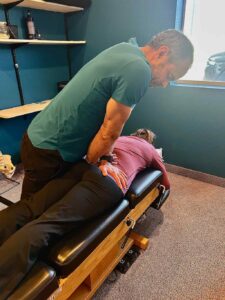
Chiropractic care is best supported for cervicogenic headaches and may help tension headaches, especially when neck and shoulder tension are involved. Care usually combines gentle adjustments, massage therapy, posture advice, and simple exercises. For migraines, it may help some people when neck tension is a trigger, alongside medical care. Every person is different, and results vary. Learn more in our post on chiropractic care for headaches.
Frequently Asked Questions
What does headache location tell you?
Location offers clues, like a band around the head for tension headaches or pain behind one eye for cluster headaches, but it isn’t a diagnosis on its own. Other symptoms and patterns matter too.
What causes a headache at the base of the skull?
Tension headaches and cervicogenic headaches from the neck are common causes. Posture, stress, and tight neck muscles often play a role.
When should I worry about a headache?
Get emergency care for a sudden, severe headache or one with confusion, weakness, vision loss, fever with a stiff neck, or after a head injury.
Headache Help in Rochester
If headaches are a regular part of your life, we’d be glad to help you understand what’s behind them. Learn more about our headache and migraine relief care, then call RAK Chiropractic at (507) 208-4305 or contact us to schedule a visit in Rochester, MN 55901.